
Built for scale.
Simplified by design.
100% commodity materials. Zero re-engineering. 5× smaller footprint.
No Rare Earth Materials
- →100% commodity materials (no Pt/Ir)
- →Immune to global supply chain shocks
- →95% U.S. sourced & in-house manufacturing
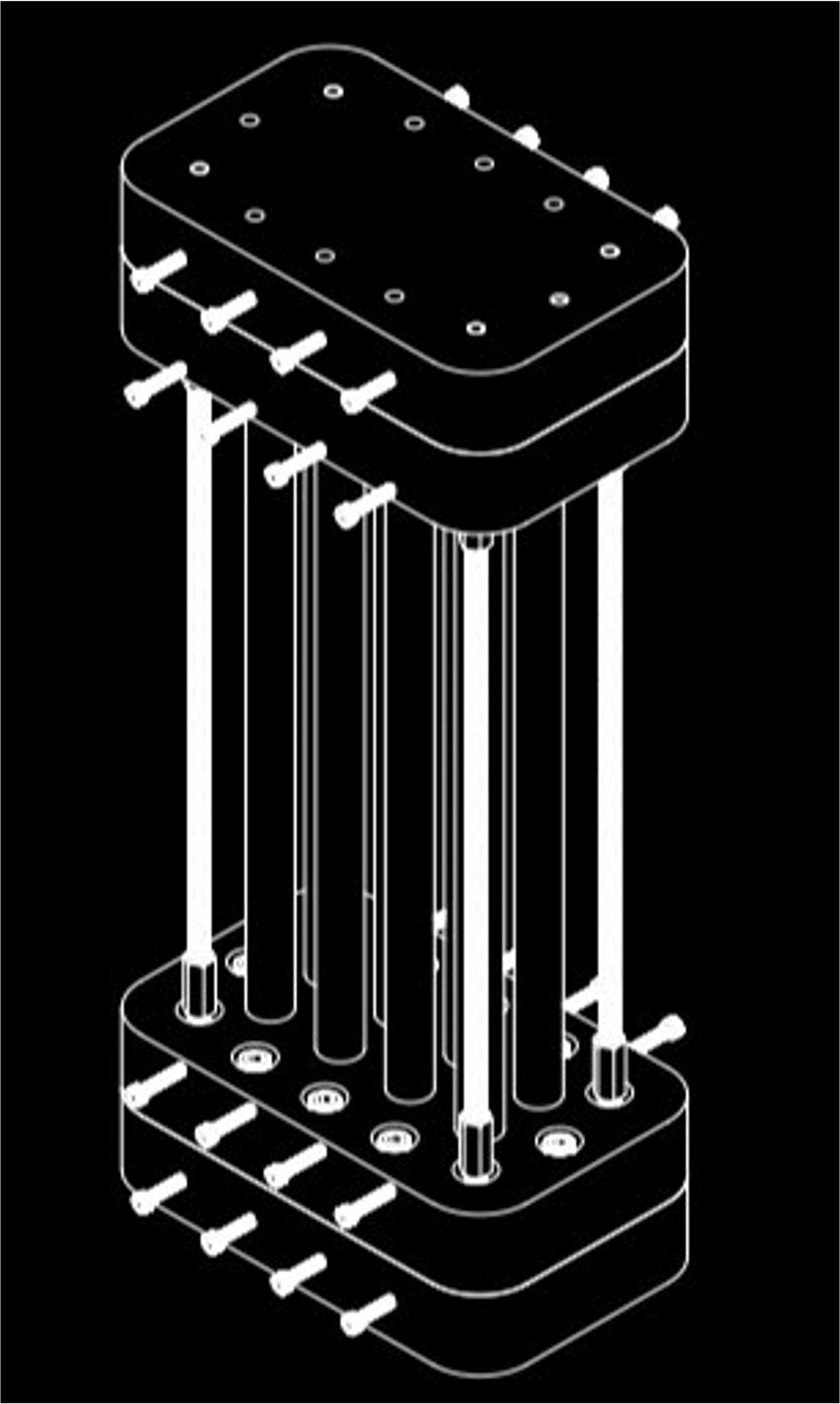
Modular Dry-Cell Architecture
- →Eliminates balance-of-plant overhead
- →5× smaller footprint than legacy PEM
- →Simple, reliable, low-maintenance operation
Linear Scalability
- →Scale by replication, not re-engineering
- →Capacity grows with demand
- →Predictable unit economics at any scale
Working with the physics,
not against it.
Purpose-Built Power Converters
Loss-free power conversion optimized for electrochemical processes
Vertical Integration
In-house PCB design and control logic for precise signal management
Pulsed Current Architecture
High-voltage pulsed waveforms matched to reaction kinetics
Start with the converter.
Most electrolysis systems treat power electronics as off-the-shelf and the cell as a chemistry problem. But electrolysis is a dynamic electrochemical load with changing impedance, gas formation, and field effects. TOBE's power stage is designed around how energy couples into the cell—power delivery and cell geometry engineered as one coupled system.
- →Purpose-built waveforms optimized for electrolysis behavior
- →Stable control as load characteristics shift
- →Fewer downstream compromises in stack and balance-of-plant
Deliver energy the way the cell needs.
Because the power stage is designed around field behavior and coupling, we can rework the electrolysis geometry and operate with water-based feed rather than relying on caustic electrolyte to force conductivity.
- →Safer handling & simpler operations—no caustic storage or dosing
- →Cleaner system integration—fewer fluid subsystems
- →Materials flexibility—no specialized electrolyte-compatible components
Skip the expensive and dangerous.
Keep the low emissions.
By engineering the power electronics and cell as one system, we eliminate the caustic chemicals, complex cooling, and hazardous electrolyte handling that make conventional systems expensive and difficult to operate.
Download technical documentation or get in touch with our team.